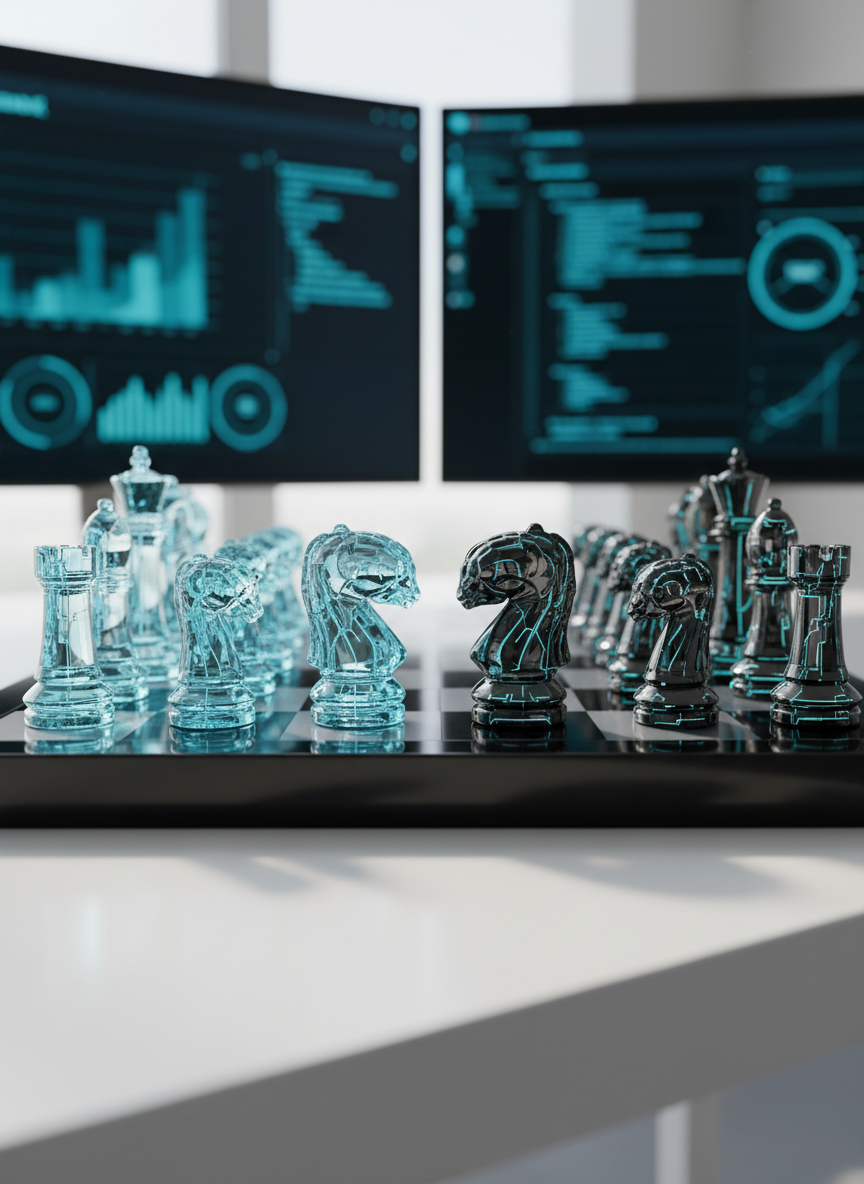
A sleek, glossy black chessboard where half the pieces are sculpted as crystalline human brains and the other half as faceted metallic robot heads, each with glowing cyan circuitry lines. The board rests on a clean white desk in a minimalist, high-tech studio. Soft, diffused daylight from a large side window creates gentle reflections on the polished surfaces and subtle shadows between squares. In the blurred background, abstract graphs and code are visible on large curved monitors. Shot at eye level with a shallow depth of field, the focus is on the central confrontation of two opposing pieces. The photographic realism and vibrant contrast create a playful yet intellectually charged atmosphere about human versus AI competition.

Humans vs AI

Explore a bold, colorful intro that explains the rules and inspires curious minds to challenge AI ideas with human insight.

About BrainVsBot

BrainVsBot pits humans against AI in fast, playful rounds to test intuition, pattern recognition, and strategic thinking.
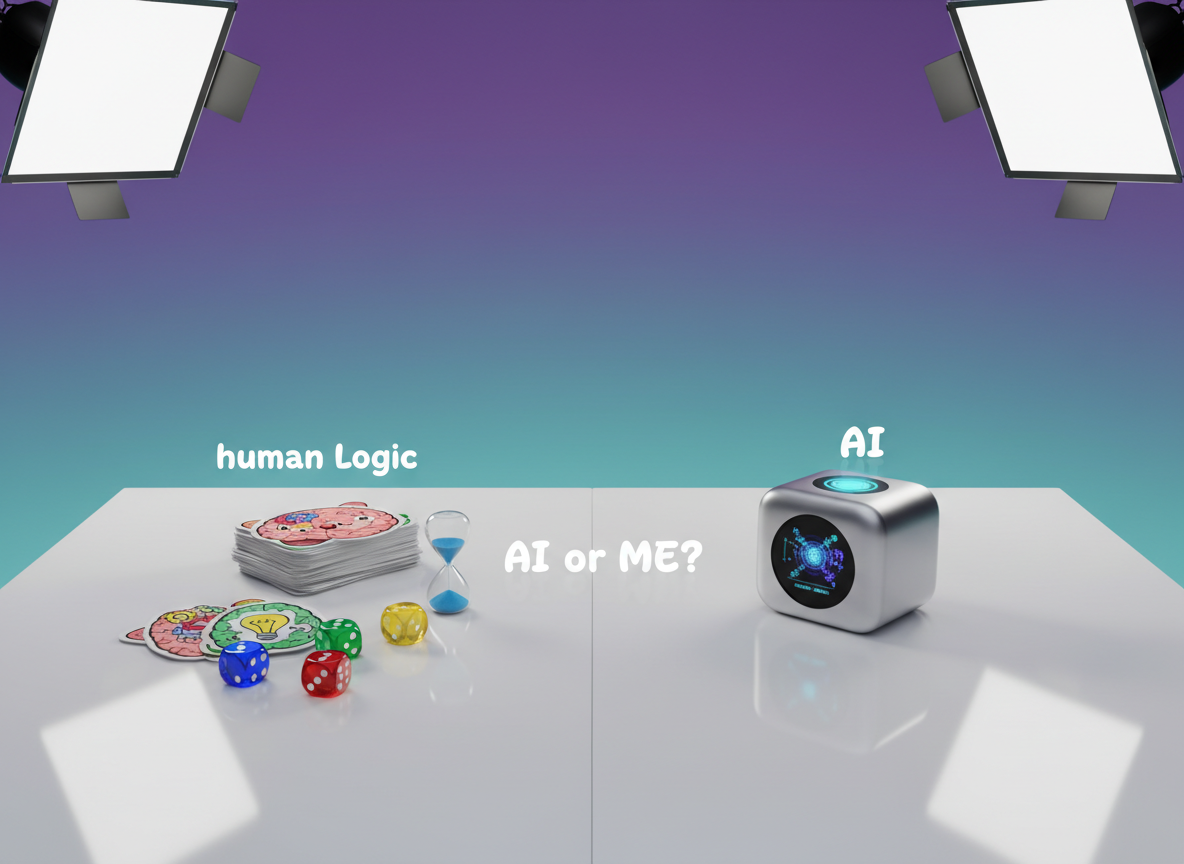
A whimsical testing lab scene featuring two competing quiz stations facing each other across a glossy white table: one side has a stack of illustrated brain-shaped cards, colorful dice, and a small hourglass filled with bright blue sand; the other side has a compact silver AI module with pulsating cyan lights and a tiny display showing spinning data visualizations. The setting is a playful, modern studio with a soft gradient wall shifting from purple to teal. Overhead softbox lighting creates smooth, even illumination with gentle shadows under the objects. Shot from a bird’s-eye view, the composition clearly separates the “human logic” tools from the “AI” device. Photographic realism with vibrant color accents conveys a fun, educational game atmosphere about testing who can spot AI better.
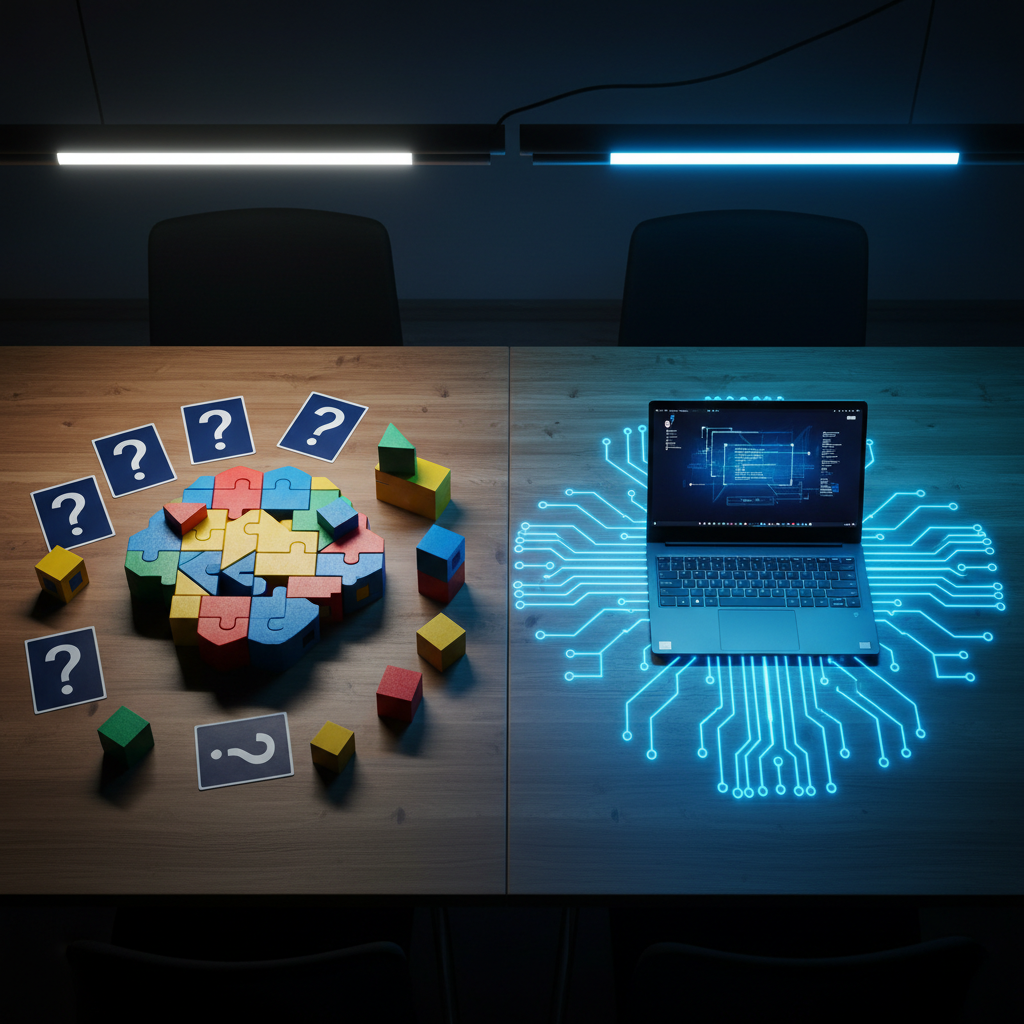
A split-screen style arrangement of two competitive workstations on a single wide wooden table: on the left, an analog brain-themed puzzle made of colorful interlocking geometric blocks and paper cards with question marks; on the right, a sleek ultra-thin laptop surrounded by glowing neon-blue circuit patterns projected onto the tabletop. Overhead, cool white LED strip lighting casts crisp highlights and well-defined shadows, emphasizing the contrast between tactile objects and digital glow. The camera is positioned in a slightly elevated, centered composition, with sharp focus across the scene. The mood is playful and curious, suggesting a game where human intuition faces algorithmic logic, captured in clean, modern photographic realism with vibrant colors.

Through example rounds and screenshots, learn how spotting AI patterns looks in action before you play.
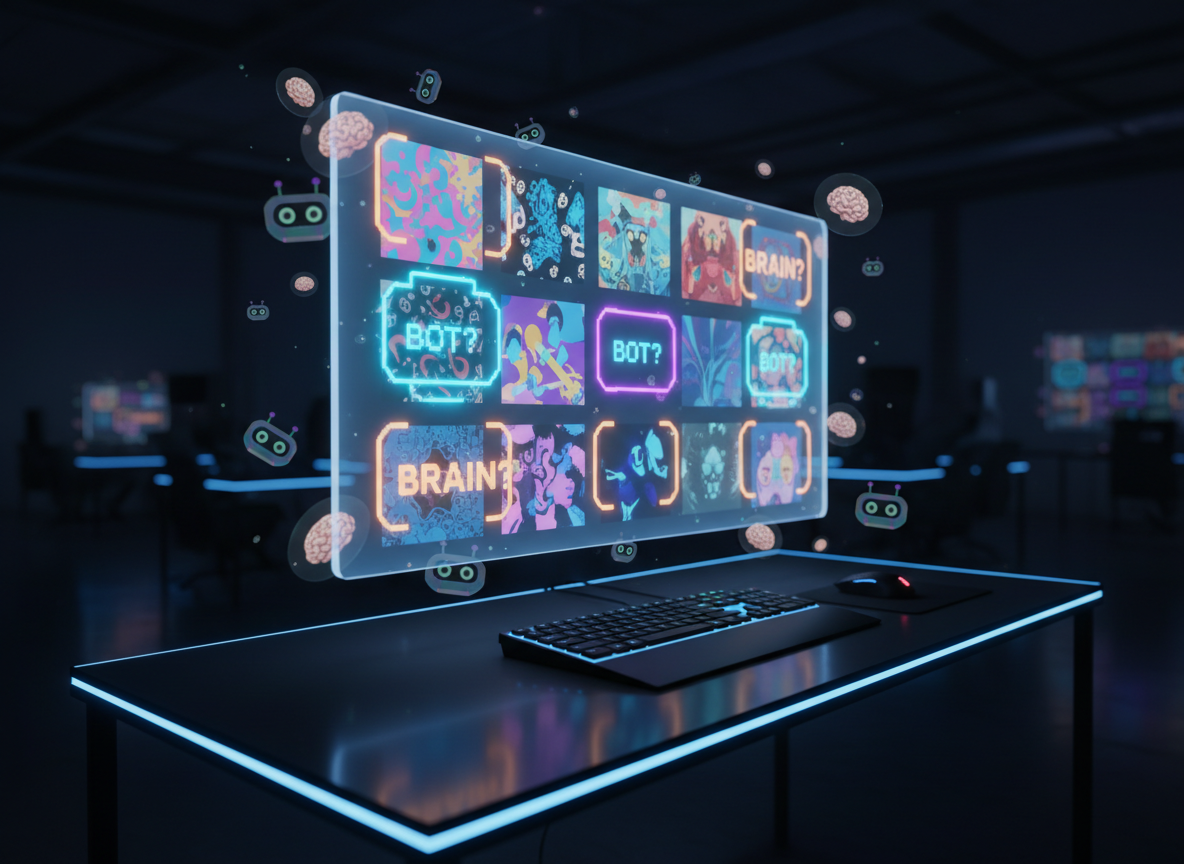
A bright, playful game dashboard displayed on a large floating transparent screen in a darkened room, showing a grid of images with some framed by animated neon brackets labeled “BOT?” and others by warm orange brackets labeled “BRAIN?”. Around the screen, colorful holographic icons of brains and tiny robot heads orbit like game tokens above a matte black desk holding only a sleek keyboard and mouse. Cool blue backlighting from hidden LED strips creates a futuristic halo around the screen, while faint reflections shimmer on the desk surface. Captured from a slightly low angle to make the interface feel grand and immersive, with a shallow depth of field blurring the distant background. The photographic style emphasizes crisp edges, glowing highlights, and an energetic, arcade-like atmosphere.

See step-by-step examples of rounds and AI cues to build confidence before you jump into live challenges.